Best Dog Nail Clippers and Grinders: Pain-Free Trimming Tools
Guillotine, scissor, and grinder-style nail tools compared. Plus how to trim dark nails without hitting the quick.

DogSupplyFinder Research Team
Product Research ·
📖 Table of Contents
Affiliate Disclosure: As an Amazon Associate, we earn from qualifying purchases. This comes at no extra cost to you and helps keep the DogSupplyFinder editorial desk publishing research-based guides. Recommendations come from specs and owner reports, not an in-house lab or a test fleet. See How We Make Money.
Most dog owners either clip nails too infrequently (causing overgrown quicks and splayed toes) or avoid it entirely because they’re terrified of cutting the quick. The right tool makes the job faster, more precise, and less stressful for both you and the dog.
This page is the clipper vs grinder buying ranking. The step-by-step protocol lives on how to trim dog nails safely. Coat tools, blades, and deshedders are home grooming tools. The cluster is the blog hub. Affiliate context is how we make money.
Listing check (nail tool): match tool type (scissor / guillotine / rotary grinder) and jaw size to the nail thickness, not the lifestyle photo of a puppy paw. Confirm blade length or drum diameter in the spec table. “Professional” on the title is a keyword. Prefer New; used grinders arrive with worn drums and mystery batteries, and used blades crush instead of cut. Check Amazon’s return window — a motor the dog will not tolerate, or a clipper that only fits toy-breed nails, is a common return. Recommendations come from specs and owner reports, not an in-house lab.
Who this page is for — and when to skip
Use this ranking if: you already handle paws at home and need a tool that matches nail thickness and color. Skip guillotine clippers if: the nails are thick as a pencil — the hole and blade do not generate enough force. Skip a grinder as the only tool if: you will not spend a week pairing the motor sound with food; the noise is the failure mode, not the drum. Skip a toy-size scissor if: you have a giant breed — buy the long-handle SKU. Skip this page if: you need the desensitization protocol, not a SKU — start on how to trim nails safely. Skip buying a home kit at all if: a groomer or clinic already does nails on a schedule you will keep.
| Situation | Buy | Skip |
|---|---|---|
| Medium dog, clear nails, monthly trims | Scissor clipper with a safety stop | A Dremel you will not charge |
| Dark nails, history of quicks | Grinder + styptic on the same shelf | One deep guillotine cut |
| Great Dane / Mastiff nails | Long-handle heavy-duty scissor | A $8 toy-breed hole clipper |
| Dog already screams at clip pressure | Grinder after sound pairing | A sharper blade “to get it over with” |
| Nails already done at the groomer | Nothing | A second unused motor in a drawer |
Desk note: “pain-free” on Amazon is a keyword. Blade type and whether the listing is a clipper vs a replacement drum are the buying facts.
Types of Nail Tools
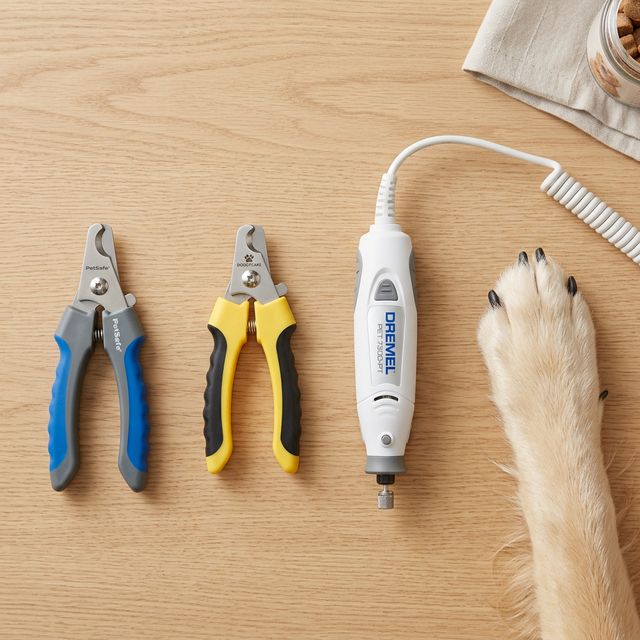
Guillotine Clippers
A hole you insert the nail through, and a blade slides across like a paper cutter. Best for small to medium dogs with thin nails. Not ideal for thick, large-breed nails because the blade doesn’t generate enough force.
Scissor/Plier Clippers
Two blades that close together like scissors. The most versatile type and the one most vets and groomers default to. Works on all nail thicknesses.
Electric Grinders (Dremels)
A rotating sanding drum that files the nail down gradually instead of cutting. Slower but eliminates the risk of cutting the quick. Many dogs that hate clippers tolerate grinders.
Best Scissor Clipper: Safari Professional Nail Trimmer
The standard that veterinary clinics stock. Sharp stainless steel blades, a spring-loaded mechanism that doesn’t tire your hand, and a safety stop that limits how much nail you can remove in one cut.
The blades on this clipper stay sharp for months of regular use. When they dull (you’ll feel it rather than hear a clean snap), replace the clipper. Dull blades crush rather than cut, which is painful for the dog.
Pros:
- Sharp, clean cuts
- Safety stop prevents over-cutting
- Comfortable grip for the owner
- Works on small through large dogs
- Under $10
Cons:
- Safety stop can be frustrating for experienced users
- Not ideal for giant breed nails (use heavy-duty version)
On the listing, match Safari Professional Nail Trimmer (scissor / plier), not a guillotine hole clipper in the same photo set. Confirm a safety stop if you want a hard limit. Skip this SKU for giant-breed nails — the blades bottom out.
Best Electric Grinder: Dremel PawControl
The gold standard for grinder-style nail care. Variable speed (two settings) lets you start slow for nervous dogs and speed up once they’re comfortable. The guard attachment prevents over-grinding, and the sanding drum is replaceable.
Grinders excel with dark nails because you remove material gradually. You can see the nail cross-section change as you approach the quick (it shifts from chalky white to a darker, slightly translucent circle). With clippers, you get no preview. One cut is either safe or bloody.
Pros:
- Variable speed for different comfort levels
- Guard prevents over-grinding
- Rechargeable battery
- Quiet operation (important for anxious dogs)
- Replaceable sanding drums
Cons:
- Slower than clippers (5-10 minutes vs. 2-3 minutes)
- Motor noise bothers some dogs initially
- Requires desensitization for noise-sensitive dogs
- More expensive than clippers
On the listing, match Dremel PawControl (or the current PawControl SKU), two speeds, and that a guard plus replacement drums are in the box. Marketplace “Dremel style” rotary tools are often hardware grinders with the wrong drum. Skip if you will not pair the motor sound first.
Best Guillotine Clipper: Resco Original Deluxe
A favorite in grooming salons for a reason. The blade is replaceable, so the tool lasts years without going dull. The handle is comfortable enough that you won’t get hand cramps even if you’re trimming multiple dogs.
Pros:
- Replaceable blades (saves money long-term)
- Clean, precise cuts
- Comfortable handle
- Durable construction lasts years
Cons:
- Learning curve for proper nail insertion angle
- Not suitable for large, thick nails
- Replacement blades require ordering
On the listing, match Resco Original Deluxe guillotine and a replaceable-blade model, not a disposable hole clipper. Confirm the nail-hole diameter vs your dog’s nail. Skip this SKU for thick large-breed nails — the blade travel is the limit.
Best for Giant Breeds: Millers Forge Dog Nail Clipper (Large)
When your dog’s nails are thick as a pencil, regular clippers won’t cut it (literally). The Millers Forge large clipper is built for Great Dane, Mastiff, and Saint Bernard nails that would jam or crack standard tools. Longer handles give you the grip strength big nails demand.
Pros:
- Handles thick, large-breed nails
- Long handles for better grip on thick nails
- Stainless steel blades
- Affordable for a specialty tool
Cons:
- Too large for small/medium dogs
- No safety stop
- Blades not replaceable
On the listing, match Millers Forge large / giant-breed scissor, not the small salon size. Confirm handle length. Skip this SKU on small and medium dogs — you lose control.
Best Styptic Powder: Miracle Care Kwik Stop
Not a cutting tool, but you need this next to whatever tool you use. When you cut the quick (and you will, eventually), Kwik Stop stops the bleeding in about 30 seconds. Dip the affected nail directly into the powder and apply gentle pressure.
Pros:
- Stops bleeding fast
- Benzocaine provides mild pain relief
- Lasts through dozens of uses per container
On the listing, match Kwik Stop (or the current Miracle Care styptic powder SKU), not a random clotting gel. Keep it next to the tool. This is a first-aid powder for a nicked quick, not a reason to cut deeper.
How to Trim Dark Nails Safely
Dark nails hide the quick completely. Here’s the technique groomers use:
- Trim small amounts at a time. Take off 1-2mm slivers rather than large chunks.
- Look at the cross-section after each cut. The nail center changes from dry, chalky white to a darker, slightly moist circle as you approach the quick.
- Stop when you see the dark dot. That darker center is the tip of the quick. Stop cutting.
- Use a grinder for the final precision. After clipping within safe range, grind the last bit for a smooth, rounded finish.
- Tip: the two-week rule. If nails touch the floor when the dog is standing, they’re too long. Trim every 2 weeks to maintain proper length and gradually recede an overgrown quick.
Desensitizing Your Dog to Nail Trimming
Dogs that panic during nail trims learned that response somewhere. Rebuild the association:
- Week 1: Handle paws while giving treats. Touch nails, spread toes, hold each paw for 5 seconds. Treat every time.
- Week 2: Bring out the tool. Let the dog sniff it. Treat. Touch the clipper to a nail without cutting. Treat.
- Week 3: Clip one nail. Just one. Treat heavily. Done for the day.
- Week 4: Clip 2-3 nails per session. Build up gradually.
This takes patience. Rushing creates a dog that needs sedation for nail trims for the rest of their life. The longer protocol is how to trim nails safely.
How to use the tool, and what actually fails
Match the tool to the nail, not the photo
Scissor clippers are the default for most adult dogs. Guillotine clippers need the nail centered in the hole or they crush. Grinders remove a sliver at a time, which is why dark nails are easier to read — you see the chalky center change before you reach the quick. Technique, not a SKU, is how to trim nails at home.
Maintenance
- Wipe blades after each session. Hair and keratin on the pivot is what makes a “sharp” clipper start crushing.
- Replace or sharpen when the cut sounds dull. A crushed nail is painful even when you miss the quick.
- Swap grinder drums when the grit is smooth. A polished drum heats the nail instead of filing it.
- Store styptic powder closed and dry. A caked bottle is why people reach for cornstarch in a panic.
Common failure modes (skip-buy signals)
- Wrong jaw size. Toy clippers on a Dane split the nail. Giant clippers on a Yorkie slip.
- Buying a grinder to skip training. The motor is a new noise. If you will not pair it, you will not use it.
- Used or marketplace blades. Dull steel is how owners hit the quick on a “safe” sliver cut.
- Calling a tool a medical fix. Overgrown nails that have curled into the pad, or a dog that will not let a paw be held, belong with a vet or groomer — not a sharper SKU on this page.
Frequently Asked Questions
How often should I trim my dog’s nails?
Every 2-3 weeks. If you hear clicking on hard floors, they’re overdue. Regular trimming gradually shortens the quick, making future trims safer. Dogs that walk on concrete regularly may need trimming less often because pavement files nails naturally.
My dog screams when I try to trim nails even if I haven’t cut the quick. Why?
Some dogs are dramatic about nail trimming without experiencing pain. The pressure of the clipper on the nail (before cutting) can feel uncomfortable. Try a grinder instead. The gradual filing sensation is different enough that many clipper-phobic dogs tolerate it.
Can I use human nail clippers on a dog?
Only on very small puppies with thin, soft nails. Adult dog nails are too thick and round for flat human clipper blades. Human clippers crush rather than cut, which splinters the nail.
You Might Also Like
DogSupplyFinder Research Team
Product Research
Our research team analyzes ingredient lists, AAFCO feeding standards, safety specifications, and thousands of verified owner reviews, with particular attention to breed-specific needs such as brachycephalic breeds and dogs with dietary sensitivities. Evaluations prioritize safety specs, third-party certifications, and manufacturer quality controls over marketing language.
Dog Tips, Deals & Gear Guides
Expert buying guides, breed-specific product picks, and honest gear reviews. Plus our free New Puppy Checklist for subscribers.
📬 No spam, ever. Unsubscribe anytime. · Get the free puppy checklist