Best Dog Sunscreen and Sun Protection
Dogs with thin coats or light-pigmented skin need sunscreen. Here's what's safe, what's toxic, and the best dog-specific sunscreen products tested.

DogSupplyFinder Research Team
Product Research ·
📖 Table of Contents
Affiliate Disclosure: As an Amazon Associate, we earn from qualifying purchases. This comes at no extra cost to you and helps keep the DogSupplyFinder editorial desk publishing research-based guides. Recommendations come from specs and owner reports, not an in-house lab or a test fleet. See How We Make Money.
Medical Disclaimer
This content is for informational purposes only and is not intended as a substitute for professional veterinary advice, diagnosis, or treatment. Always consult with a qualified veterinarian before making changes to your dog's care routine.
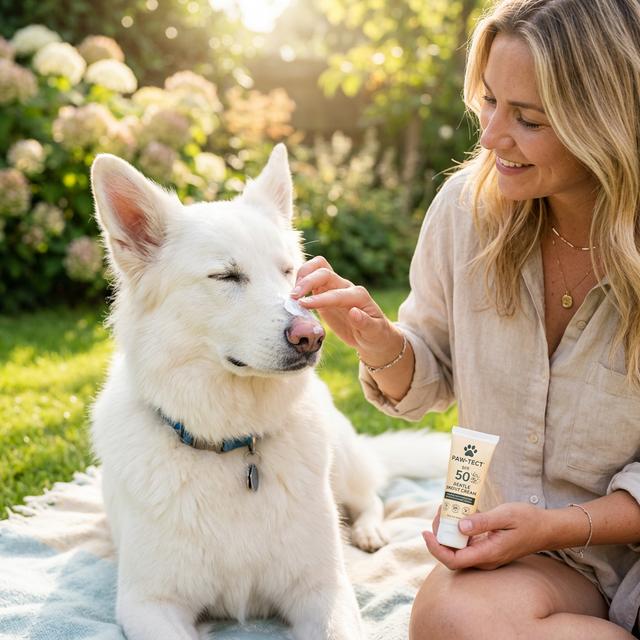
Most dogs don’t need sunscreen. Their coat provides adequate UV protection. But certain dogs, particularly those with short, sparse, or white coats, pink or light-pigmented skin, or who spend extended time in direct sun, can develop sunburn and, over time, skin cancer.
The specific dogs that need protection: hairless breeds (Chinese Crested, Xoloitzcuintli), white or very light-colored dogs (white Boxers, white Bull Terriers, light-colored Pit Bulls), dogs with pink noses, and any dog who’s recently been shaved.
The critical warning: human sunscreen is not safe for dogs. Several common ingredients, zinc oxide, para-aminobenzoic acid (PABA), and some fragrances, are toxic when ingested, and dogs lick themselves. Dog-specific formulations are designed to be safe if licked.
What Makes Sunscreen Safe for Dogs
Safe ingredients to look for:
- Titanium dioxide (pet-safe in topical form)
- Avobenzone (in pet-formulated concentrations)
- Dog-specific mineral formulations
Ingredients to avoid:
- **Zinc oxide, toxic to dogs, causes hemolytic anemia
- PABA (para-aminobenzoic acid), harmful if ingested
- Artificial fragrances, can cause contact sensitivity and GI upset if licked
SPF: SPF 30 is the practical minimum. SPF 50 is preferable for very light-skinned or heavily sun-exposed dogs.
Where to Apply
Focus on areas with thin or no coat:
- Nose and muzzle, especially pink or light-pigmented noses
- Ear tips, prone to sunburn and squamous cell carcinoma in light dogs
- Belly, especially when dogs sunbathe lying on their backs
- Groin and armpits, if sparse-coated
- Skin around the eyes, avoid direct eye contact
Our Top Picks
Best Overall: Epi-Pet Sun Protector Spray
The only FDA-compliant dog sunscreen on the market with certified SPF 30+ testing. Spray-on application makes coverage easier and faster compared to cream formulations. Fragrance-free. Works on both dogs and horses. Reapply every 4-6 hours of sun exposure.
- SPF: 30+, FDA-compliant testing
- Form**: Spray
- **Best for: General use, noses, ear tips
Best for Nose Specifically: My Dog Nose It! Sun Protection Balm
A solid balm format works better than spray for nose application, you can target the area precisely without getting product in the nostrils or eyes. This formula is zinc-free, uses natural waxes and oils, and also moisturizes dry, cracked noses which is a common issue in sun-exposed dogs.
- Form**: Balm stick
- **Best for: Nose, paw pads
Best for Hairless Breeds: Natural Dog Company Sun Shield
Formulated specifically for dogs with minimal coat. The lotion format allows more complete coverage across large skin surface areas. Moisturizing base helps with the dry skin common in hairless breeds. Fragrance-free and zinc-free.
- Form**: Lotion
- **Best for: Hairless breeds, white-coated dogs
What About Protective Clothing?
For dogs that repeatedly remove sunscreen by licking, UV-protective clothing is the practical alternative:
Sun suits / rash guards: Cover the trunk, particularly useful for dogs who sunbathe on their back. Several companies make UV-rated dog apparel. Look for UPF 50 rating.
Hats: Some dogs tolerate sun visors or hats for nose and eye protection. This requires desensitization training for most dogs.
UV protective shirts: Simpler to deal with than repeated sunscreen applications for dogs who need daily protection.
Practical Tips
Test for sensitivity first: Apply a small amount to the inner forearm area (no coat) and wait 24 hours before full application. Contact sensitivities occasionally occur even with pet-safe formulations.
Reapply after swimming: Water removes sunscreen. Any dog swimming or playing in a pool needs reapplication every 1-2 hours.
Don’t rely on sunscreen alone: It’s a supplement to management, not a replacement. Limit sun exposure during peak hours (10am-4pm), provide shade, and monitor light-skinned dogs for any developing skin changes.
Regular skin checks**: During summer, routinely check light-pigmented skin for any persistent redness, scaliness, or sores that don’t heal — these can be early signs of UV-related skin damage or squamous cell carcinoma.
Frequently Asked Questions
Can I use human sunscreen on my dog?
No. Most human sunscreens contain zinc oxide and/or PABA, both of which are toxic to dogs when ingested. Zinc oxide causes hemolytic anemia — the destruction of red blood cells — even in small amounts. Dogs lick themselves, so any topically applied product will be partially ingested. Use only products specifically formulated as pet-safe.
Does my dog with a thick coat need sunscreen?
Probably not. Dense coats provide effective UV protection for the skin underneath. The areas of concern are those with thin or absent coat: noses, ear tips, bellies, and any skin visible through parted or thin fur. If your dog has a normal, full coat and doesn’t sunbathe extensively on their back, standard sun management (limiting peak-hour exposure, shade) is sufficient.
What SPF should dog sunscreen be?
SPF 30 minimum, SPF 50 preferred for heavily exposed dogs. The difference between SPF 30 and 50 in UV blocking is modest (97% vs 98% UVB blocked), but SPF 50 provides meaningful additional protection for dogs in direct sun for extended periods.
How do I get my dog to stop licking off sunscreen?
Apply and then immediately distract with a walk, play, or feeding. Most dogs will lick initially out of novelty, but once the product is absorbed (5-10 minutes), licking reduces. For persistent lickers, spray formulations tend to absorb faster than creams, and balm formulations for targeted nose/ear application are minimally palatable.
You Might Also Like
- How to Keep Your Dog Cool in Summer
- Dog First Aid Basics Every Owner Should Know
- Best Cooling Products for Dogs in Summer
We evaluate pet products independently. To learn more about our editorial standards, read our Editorial Policy.
DogSupplyFinder Research Team
Product Research
Our research team analyzes ingredient lists, AAFCO feeding standards, safety specifications, and thousands of verified owner reviews, with particular attention to breed-specific needs such as brachycephalic breeds and dogs with dietary sensitivities. Evaluations prioritize safety specs, third-party certifications, and manufacturer quality controls over marketing language.
Dog Tips, Deals & Gear Guides
Expert buying guides, breed-specific product picks, and honest gear reviews. Plus our free New Puppy Checklist for subscribers.
📬 No spam, ever. Unsubscribe anytime. · Get the free puppy checklist