Preventing Dental Disease: The Silent Threat to Your Dog's Health
By age 3, most dogs have dental disease. It causes chronic pain, tooth loss, and organ damage. Prevention is cheaper and easier than treatment.

DogSupplyFinder Research Team
Product Research ·
📖 Table of Contents
This page is the prevention plan. The prevalence overview is Dog Dental Care: Why 80% of Dogs Have Gum Disease by Age 3. Brushing technique is Why Brushing Matters and How to Start.
The Scale of the Problem
The American Veterinary Dental College reports that most dogs show signs of periodontal disease by age 3. Small breeds are affected even earlier because their teeth are crowded into smaller jaws, creating tight crevices where bacteria thrive. Breeds like Yorkies, Dachshunds, Chihuahuas, and Cavalier King Charles Spaniels are notorious for early and aggressive dental disease.
What makes dental disease so dangerous is that it progresses silently. Dogs rarely stop eating entirely because of mouth pain. They adapt. They chew on one side, swallow food whole, or simply tolerate chronic discomfort without showing obvious distress. By the time most owners notice something is wrong, the disease has already progressed significantly. Understanding the subtle signs your dog is in pain can help you catch dental issues earlier.
How Dental Disease Progresses
The progression follows a predictable pattern, and knowing these stages helps you understand why daily prevention matters so much:
- Plaque (soft bacterial film) forms on teeth within hours of eating. At this stage, it is invisible to the naked eye and easily removed with brushing.
- Within 48-72 hours, minerals in saliva harden plaque into tartar (calculus), which cannot be brushed away. Once tartar forms, only a professional cleaning under anesthesia can remove it.
- Tartar irritates the gums, causing gingivitis (red, swollen, bleeding gums). This stage is reversible with professional cleaning and improved home care.
- Untreated gingivitis progresses to periodontitis: bone loss, tooth root exposure, and tooth loss. This stage is irreversible. The bone that is lost never grows back.
Many owners assume a little tartar or mildly red gums are normal. They are not. They are the early warning signs that the disease process is already underway.
The Systemic Threat
This is the part that surprises most dog owners. Dental disease is not just about bad breath and loose teeth.
Bacteria from infected gums enter the bloodstream every time the dog chews. These bacteria can colonize the heart valves, liver, and kidneys, causing chronic low-grade organ damage that accumulates over years. Veterinarians regularly see senior dogs with kidney disease, liver inflammation, or heart valve infections that trace back to years of untreated periodontal disease.
A dog with chronic dental infections is essentially living with an open wound in their mouth, constantly seeding bacteria into their bloodstream. Treating the dental disease often leads to noticeable improvements in energy, appetite, and overall quality of life, even in dogs whose owners did not realize anything was wrong.
Prevention Strategy
Prevention is dramatically cheaper and less stressful than treatment. A professional dental cleaning with extractions can easily cost $800 or more, while a tube of enzymatic toothpaste and a dog toothbrush together cost under $15.
Daily Brushing
This is the gold standard. Use a dog-specific enzymatic toothpaste (never human toothpaste, which contains fluoride and often xylitol, both toxic to dogs) and a soft-bristled brush or finger brush. Focus on the outer surfaces of the teeth, particularly the upper back molars and canines where tartar accumulates fastest.
Getting your dog comfortable with brushing takes patience. Start by letting them lick the toothpaste off your finger. Then progress to rubbing the toothpaste on their teeth with your finger. Finally, introduce the brush. Most dogs accept brushing within a week or two if you take it slow and make it a positive experience with praise and rewards.
Dental Chews
VOHC-accepted products (look for the Veterinary Oral Health Council seal) like Greenies, OraVet chews, or C.E.T. VeggieDent provide supplemental plaque control through mechanical scraping and sometimes antimicrobial ingredients. These are helpful additions to a home care routine but should never replace brushing.
Choose chews that are appropriately sized for your dog. A chew that is too small gets swallowed whole without providing any dental benefit.
Water Additives and Dental Sprays
Products like Healthymouth water additive or Vetradent spray can provide a mild antimicrobial effect. They are not as effective as brushing, but they are better than nothing for dogs that absolutely refuse to tolerate tooth brushing.
Professional Dental Care
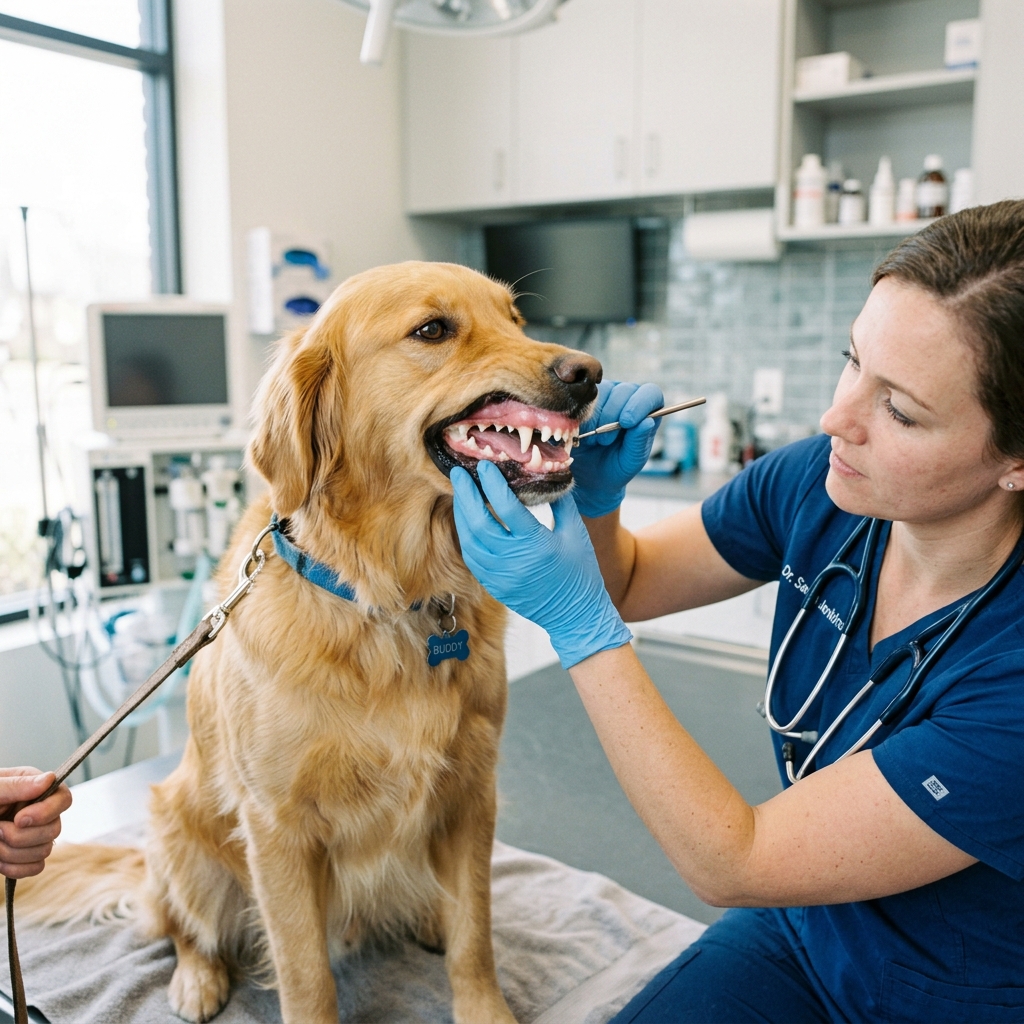
Schedule annual dental exams at your vet. Your veterinarian can grade the severity of dental disease and recommend when professional cleaning is needed. Professional cleanings are performed under anesthesia, which allows thorough cleaning below the gum line, full-mouth radiographs (X-rays) to assess bone loss and root health, and extractions of any teeth that cannot be saved.
Anesthesia-free dental cleanings, which are marketed at pet stores and grooming salons, are largely cosmetic. They can scrape visible tartar off the crowns but cannot clean below the gum line, which is where the actual disease process occurs. Most veterinary dental specialists consider them inadequate.
Raw Meaty Bones
Supervised chewing on raw, appropriately sized meaty bones provides mechanical scraping action similar to what wild canids experience. However, this comes with risks: fractured teeth (especially slab fractures of the upper fourth premolars), GI obstruction, and bacterial contamination. If you choose to offer raw bones, use bones larger than the dog’s head to prevent swallowing, supervise the entire session, and discard the bone after one session. Never feed cooked bones, which splinter.
The Cost of Ignoring Dental Health
Owners who skip dental prevention often end up spending far more in the long run. A dog that needs a full dental cleaning with multiple extractions at age 8 might face a bill of $1,500 to $3,000 or more. And the damage to internal organs from years of chronic bacterial exposure cannot be undone.
If your dog is already eating a balanced diet, the right nutrition plan combined with good dental hygiene gives them the best chance at a long, comfortable life. Prevention is not just the cheapest option. It is the kindest one. For older dogs already showing signs of dental wear, pairing dental care with a broader senior dog care approach makes a real difference in quality of life.
DogSupplyFinder Research Team
Product Research
Our research team analyzes ingredient lists, AAFCO feeding standards, safety specifications, and thousands of verified owner reviews, with particular attention to breed-specific needs such as brachycephalic breeds and dogs with dietary sensitivities. Evaluations prioritize safety specs, third-party certifications, and manufacturer quality controls over marketing language.
Related reading
Same cluster on this site — live guides only.
Dog Tips, Deals & Gear Guides
Expert buying guides, breed-specific product picks, and honest gear reviews. Plus our free New Puppy Checklist for subscribers.
📬 No spam, ever. Unsubscribe anytime. · Get the free puppy checklist