How to Handle Resource Guarding in Dogs Safely
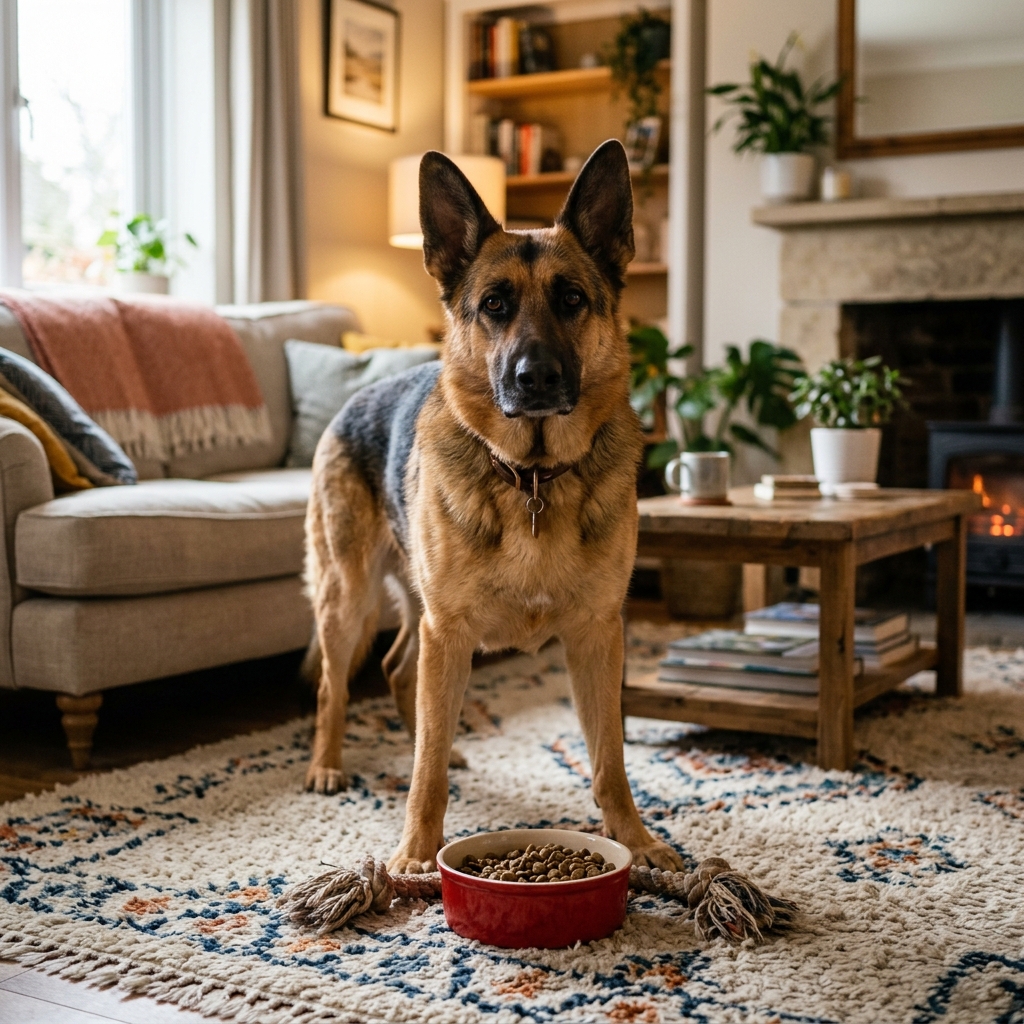
Your dog growls when you approach their food bowl. This is resource guarding, and punishing it makes it dangerous. Here is the safe approach.
DogSupplyFinder Research Team
Product Research ·
📖 Table of Contents
What Is Resource Guarding?
Resource guarding is when a dog uses threatening behavior (freezing, hard staring, growling, snapping, or biting) to protect something they value from being taken away. The guarded item can be food, a toy, a bone, a sleeping spot, or even a person.
Resource guarding is a normal, instinctive canine behavior. In the wild, a dog that did not protect its food did not survive. However, in a domestic setting, it is a serious safety concern, especially in homes with children.
The Spectrum of Guarding
Resource guarding exists on a scale:
- Mild: The dog freezes, eats faster, or moves away with the item.
- Moderate: The dog growls, shows teeth, or snaps in the air (a warning bite that deliberately misses).
- Severe: The dog bites, breaks skin, or guards multiple types of resources aggressively.
For more on this topic, see our guide on 10 Signs Your Dog Is in Pain (Dogs Hide It Well).
What NOT to Do
- Do not punish the growl. A growl is a warning. If you punish a dog for growling, they learn to skip the warning and go straight to biting. The growl is your safety signal.
- Do not forcibly take items away. This confirms the dog’s fear that people steal their stuff, making the guarding worse.
- Do not put your hand in the food bowl while the dog is eating. This does not teach “tolerance.” It teaches “humans are threats to my food.”
For more on this topic, see our guide on Why Do Dogs Chase Their Tails? Fun, Boredom, or a Problem?.
The Trade-Up Method (For Mild to Moderate Guarding)
The goal is to change the dog’s emotional response from “person approaching = I’m about to lose my thing” to “person approaching = I’m about to get something even better.”
- Walk past the dog while they are eating or chewing. Without stopping, toss a high-value treat (chicken, cheese) near them from a safe distance.
- Repeat at every meal for 1-2 weeks.
- Gradually decrease the distance from which you toss the treat.
- Eventually, the dog will look up eagerly when you approach, associating your presence with bonus food.
The “Drop It” / Trade Method (For Toys and Bones)
Approach with something the dog wants more than the guarded item (a different, better treat or toy). Offer the trade. When the dog drops the guarded item to take the better offer, praise and let them keep the new item. Then calmly pick up the original item.
Over time, the dog learns: giving things to humans = getting better things back.
When to Get Professional Help
If your dog has bitten (broken skin) over a resource, or if guarding is directed at children, do not attempt to modify this yourself. Consult a board-certified veterinary behaviorist (DACVB) or a certified applied animal behaviorist (CAAB).
DogSupplyFinder Research Team
Product Research
Our research team analyzes ingredient lists, AAFCO feeding standards, safety specifications, and thousands of verified owner reviews, with particular attention to breed-specific needs such as brachycephalic breeds and dogs with dietary sensitivities. Evaluations prioritize safety specs, third-party certifications, and manufacturer quality controls over marketing language.
Dog Tips, Deals & Gear Guides
Expert buying guides, breed-specific product picks, and honest gear reviews. Plus our free New Puppy Checklist for subscribers.
📬 No spam, ever. Unsubscribe anytime. · Get the free puppy checklist