How to Introduce a New Dog to Your Cat: A Step-by-Step Guide
Bringing a dog into a cat household? Follow this proven step-by-step introduction process to keep both pets safe and set them up for success.

DogSupplyFinder Research Team
Product Research ·
📖 Table of Contents
Before You Bring the Dog Home
A successful dog-cat introduction starts before the new dog even walks through the door. Preparation is everything. Adding a second dog to a dog household is a different protocol: introducing a new dog to a resident dog.
Set Up Separate Spaces
Your cat needs a dog-free zone. Set up a room with everything the cat needs: litter box, food, water, scratching post, and elevated perches. This room will be the cat’s safe retreat throughout the introduction process and potentially for weeks afterward.
Gather Safety Equipment
You will need:
- Baby gates: Preferably ones with a small cat door at the bottom so the cat can move freely but the dog cannot follow
- A sturdy leash and harness: For all controlled introductions
- High-value treats: For both the dog and the cat
- A crate: For the dog’s safe space and for visual introductions
Research the Dog’s History
If adopting, ask about the dog’s experience with cats. A dog that has lived with cats before is a very different prospect than a dog with unknown cat history or high prey drive. Be honest about what you are bringing into the situation.
Phase 1: Scent Introduction (Days 1-3)
Dogs and cats rely heavily on scent. Before they ever see each other, let them get used to each other’s smell.
How to Scent Swap
- Rub a cloth on the dog’s face and body, then place it near the cat’s food bowl
- Do the same with a cloth rubbed on the cat, placing it near the dog’s food bowl
- Swap bedding between the two animals
- Let the dog explore the cat’s room (with the cat safely removed) and vice versa
Watch for reactions. Calm curiosity is good. Obsessive sniffing, fixation, or agitation is a warning sign that you may need to extend this phase.
Feeding on Opposite Sides of a Door
Feed both animals on opposite sides of the closed door to the cat’s room. This creates a positive association (food) with the other animal’s scent. Start with bowls far from the door and gradually move them closer over several days.
Phase 2: Visual Introduction (Days 4-7)
Once both animals seem relaxed with each other’s scent, it is time for visual contact.
Controlled First Sight
- Put the dog on a leash and have a helper on the other side with the cat
- Open the door to the cat’s room with a baby gate in place
- Let both animals see each other from a distance
- Keep the session short (2-5 minutes)
- Reward both animals with treats for calm behavior
- End the session before either animal becomes stressed
What to Watch For
Good signs:
- Relaxed body posture
- Casual glances rather than fixation
- Willingness to eat treats
- Turning away to do other things
Warning signs:
- Dog: Fixed stare, stiff body, raised hackles, whining, lunging
- Cat: Puffed tail, hissing, flattened ears, growling, swatting
- Either: Refusal to eat, attempts to flee, aggression
If you see warning signs, calmly end the session and go back to scent-only work for a few more days.
Phase 3: Supervised Meetings (Days 7-14)
Once visual introductions are consistently calm, you can move to shared-space meetings.
Ground Rules for First Meetings
- Dog stays on leash for all meetings initially
- Cat always has an escape route to their safe room or an elevated surface
- Keep sessions short (5-10 minutes) and end on a positive note
- Never force interaction. Let both animals approach on their own terms
- Use treats liberally to reward calm, relaxed behavior from both animals
Managing the Dog’s Impulse
Even friendly dogs can be too enthusiastic. If your dog:
- Lunges toward the cat: redirect with treats and the “leave it” command
- Fixates with a stiff stare: block their line of sight and redirect
- Gets mouthy or overly excited: end the session calmly
Letting the Cat Set the Pace
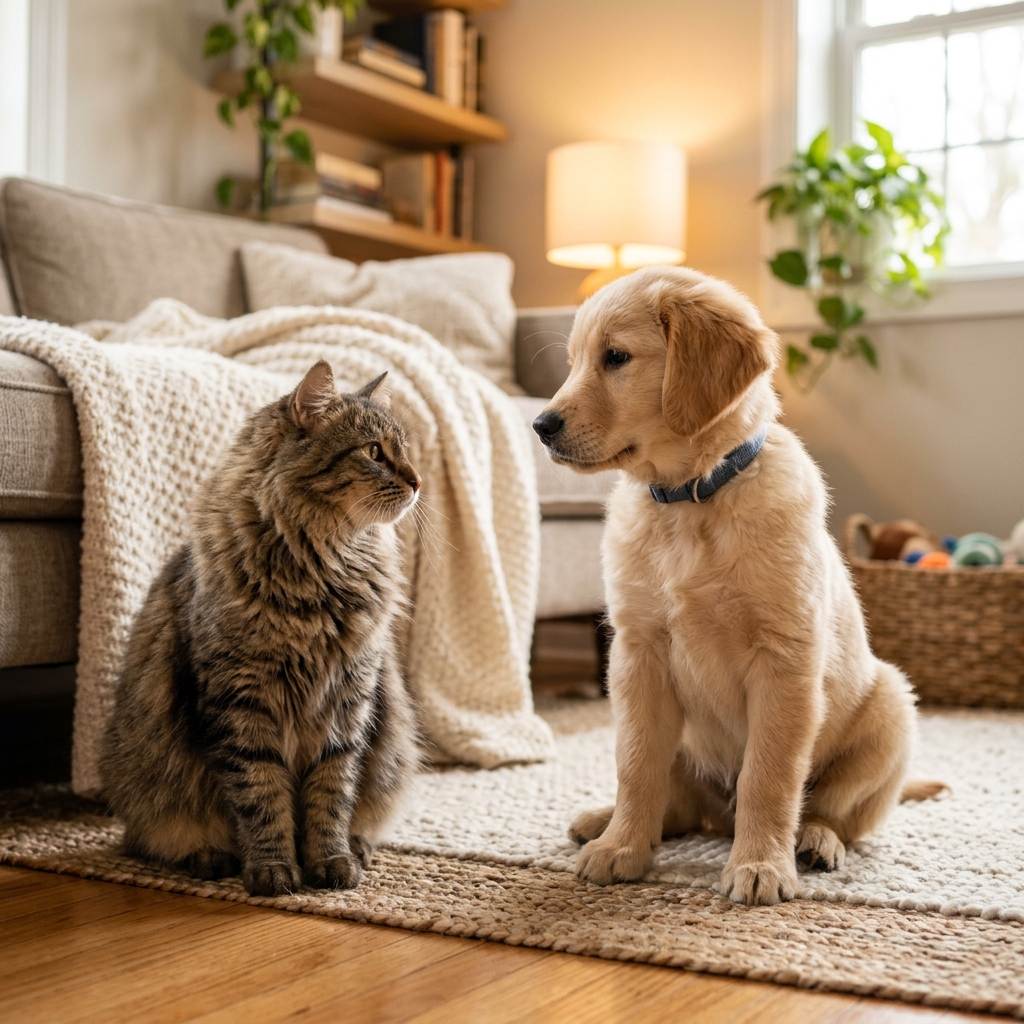
Cats need control. They need to be able to approach and retreat on their own terms. Never pick up the cat and bring them to the dog. Never trap the cat in a room with the dog. The cat’s willingness to stay in the same room is the best indicator of progress.
Phase 4: Gradual Freedom (Weeks 2-4)
As meetings become consistently calm, you can start relaxing the structure.
Step-Down Protocol
- Week 2: Dog on leash, longer sessions (15-30 minutes)
- Week 3: Dog on a long line (dragging leash) so you can grab it if needed
- Week 4: Short periods of off-leash interaction with close supervision
- Beyond: Gradually extend unsupervised time, starting with brief periods while you are still in the house
When to Leave Them Alone
Only leave a dog and cat unsupervised when:
- They have had at least 2-4 weeks of consistently calm interactions
- The dog shows no fixation, chasing, or predatory behavior
- The cat moves freely around the dog without fear
- Both animals can eat, sleep, and relax in the same space
Even then, make sure the cat always has escape routes and elevated spaces the dog cannot reach.
Breed Considerations
Some dog breeds have higher prey drives that make cat introductions more challenging:
Higher risk breeds: Greyhounds, Huskies, Terriers (most types), Shiba Inus, Rhodesian Ridgebacks, Weimaraners
Lower risk breeds: Golden Retrievers, Cavalier King Charles Spaniels, Basset Hounds, Bulldogs, Pugs, Bichon Frises
Important: These are generalizations. Individual temperament varies enormously. A well-socialized Husky can live peacefully with a cat, and a reactive Golden Retriever might not. Assess the individual dog, not just the breed.
Safety Equipment for Multi-Pet Homes
Baby Gates With Cat Doors
These are essential. Gates like the Carlson Extra Wide Walk-Through Gate with a small pet door allow the cat to move freely between rooms while keeping the dog contained.
Elevated Cat Furniture
Cats feel safer when they can get up high. Cat trees, wall-mounted shelves, and tall furniture give your cat escape routes the dog cannot access.
Separate Feeding Stations
Dogs will eat cat food if given access, and feeding time can create resource guarding conflicts. Feed animals in separate rooms or use an elevated cat feeding station.
When Introductions Fail
Not every dog-cat pair will work. Seek professional help if:
- The dog’s predatory behavior toward the cat does not diminish after several weeks of careful introduction
- The cat stops eating, grooms excessively, or hides permanently
- There is any physical aggression resulting in injury
- You have followed the protocol consistently for a month with no improvement
A certified animal behaviorist can assess whether the pairing is workable or whether rehoming one animal is the safest choice.
Final Thoughts
Patience is the single most important factor in a successful dog-cat introduction. Rushing any phase dramatically increases the risk of a negative outcome that can take months to undo. Follow the phases, read both animals’ body language, and let them set the pace. Most dogs and cats can learn to coexist peacefully, and many become genuine companions.
DogSupplyFinder Research Team
Product Research
Our research team analyzes ingredient lists, AAFCO feeding standards, safety specifications, and thousands of verified owner reviews, with particular attention to breed-specific needs such as brachycephalic breeds and dogs with dietary sensitivities. Evaluations prioritize safety specs, third-party certifications, and manufacturer quality controls over marketing language.
Dog Tips, Deals & Gear Guides
Expert buying guides, breed-specific product picks, and honest gear reviews. Plus our free New Puppy Checklist for subscribers.
📬 No spam, ever. Unsubscribe anytime. · Get the free puppy checklist