Signs Your Dog Is Overheating, and What to Do Immediately
How to recognize heatstroke in dogs, what to do in the first critical minutes, and which breeds are highest risk. Includes emergency action steps.

DogSupplyFinder Research Team
Product Research ·
📖 Table of Contents
Medical Disclaimer
This content is for informational purposes only and is not intended as a substitute for professional veterinary advice, diagnosis, or treatment. Always consult with a qualified veterinarian before making changes to your dog's care routine.
Heatstroke kills dogs within minutes. Unlike humans, dogs can’t sweat through their skin, their only mechanisms for cooling are panting and limited sweating through their paw pads. When ambient heat overwhelms these systems, core temperature rises rapidly. At 104°F (40°C) they’re in danger. At 107°F (41.7°C) organ failure begins.
The window for intervention is short. Recognizing the signs early and responding correctly is more important than any gear you can buy.
Early Warning Signs (Act Now)
If you see any of these, move your dog to a cool environment immediately, don’t wait for multiple symptoms:
- Heavy, rapid panting that doesn’t slow when at rest
- **Excessive drooling, thick, ropey saliva rather than watery drool
- Bright red gums and tongue, healthy gums are pink; red indicates heat stress
- Restlessness or anxiety, pacing, inability to settle
- Seeking shade or lying flat on cool surfaces, the dog is trying to self-regulate
Severe/Emergency Signs (Treat as Medical Emergency)
These signs indicate heatstroke, call your vet immediately while you begin cooling:
- Vomiting or diarrhea, especially if bloody
- Stumbling, loss of coordination, or collapse**
- **Pale or gray gums, circulation is failing
- Glazed eyes or unresponsiveness**
- Muscle tremors or seizures
- Very rapid heart rate
What To Do: Emergency Steps
-
Move immediately. Get the dog into air conditioning or shade. Every second of continued heat exposure worsens the outcome.
-
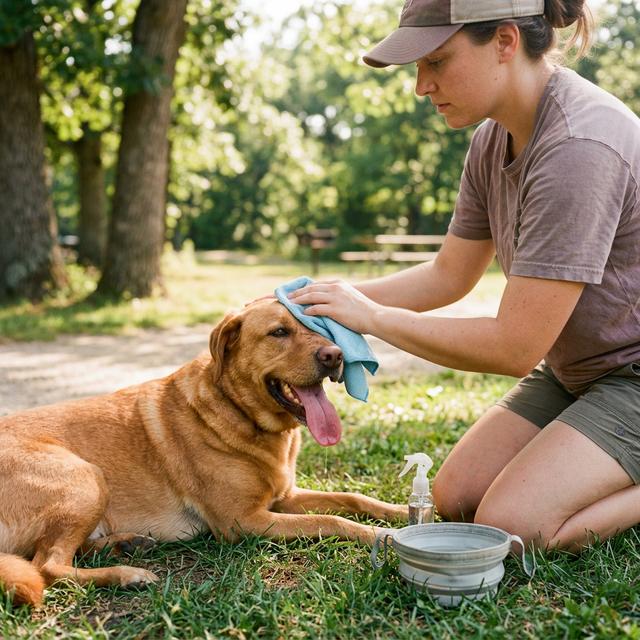
Begin cooling, the right way.
- Apply cool (not cold) water to the armpits, groin, neck, and paw pads, areas with blood vessels close to the surface
- Use a fan to increase evaporation if available
- Do NOT use ice water or ice packs, rapid temperature drop can cause blood vessels to constrict, trapping heat in the core and causing shock
**3. Offer water, cool, not cold, if the dog is conscious and can swallow. Don’t force it.
-
Call your vet or emergency animal hospital now. Even if the dog appears to recover, heatstroke causes internal damage that isn’t visible. Kidney failure, brain swelling, and blood clotting disorders can develop hours later. Vet examination is mandatory after any heatstroke episode.
-
Transport carefully. Keep the car air conditioning on maximum. Continue applying cool (not cold) wet cloths during transport.
Emergency Numbers
Keep both saved in your phone:
- ASPCA Animal Poison Control: (888) 426-4435 (for toxin ingestion, not heatstroke, but useful)
- Pet Poison Helpline**: (855) 764-7661
- **Your regular vet: _______________
- Nearest 24-hour emergency vet: _______________
Highest-Risk Breeds
Brachycephalic (Flat-Faced) Breeds
French Bulldogs, Bulldogs, Pugs, Boston Terriers, Shih Tzus, and Boxers are at extreme risk. Their compressed airways mean panting, their primary cooling mechanism, is inherently less efficient. Heatstroke can occur in these breeds at temperatures that are merely uncomfortable for other dogs.
Heavy-Coated Breeds
Huskies, Malamutes, Chow Chows, and similar double-coated breeds trap heat even with shade and water. Never shave a double coat, the undercoat actually provides insulation against heat, and shaving damages the coat structure permanently.
Obese Dogs
Fat is an insulator. Overweight dogs generate more heat and dissipate it less efficiently. Weight management is one of the most effective heat-safety measures for high-risk dogs.
Elderly Dogs and Puppies
Both have impaired thermoregulation. Elderly dogs have reduced cardiovascular efficiency; puppies haven’t fully developed temperature regulation mechanisms.
Prevention: When Not to Worry vs. When to Be Cautious
| Temperature | Risk Level |
|---|---|
| Below 70°F (21°C) | Low, most dogs fine with normal exercise |
| 70-80°F (21-27°C) | Moderate, watch brachycephalic breeds, limit exercise in sun |
| 80-85°F (27-29°C) | High, shorten walks, avoid peak hours (11am-4pm), ensure shade |
| Above 85°F (29°C) | Very high, limit outdoor time, watch all dogs closely |
| Above 90°F (32°C) | Extreme, outdoor exercise only for brief bathroom breaks |
The pavement test: If you can’t hold the back of your hand against the pavement for 7 seconds, it’s too hot for your dog’s paws. Paw pad burns happen faster than heatstroke and are equally preventable.
Good timing**: Walk dogs before 9am or after 7pm in summer. Heat peaks mid-afternoon, and stored ground heat remains dangerous even after air temperature drops.
Frequently Asked Questions
What is the difference between heat exhaustion and heatstroke in dogs?
Heat exhaustion is the earlier stage, the dog is struggling but hasn’t crossed into organ-threatening temperature range (above 104°F / 40°C). Heatstroke means core temperature has exceeded that threshold and organ damage is actively occurring. The visible signs overlap; treat any suspected heat illness as an emergency since you can’t measure core temperature without a rectal thermometer.
Can a dog fully recover from heatstroke?
Yes, if caught and treated quickly. Dogs who receive prompt veterinary care within the first hour have much better outcomes than those who are treated hours later. The severity of any lasting damage depends on how high the temperature got and how long it stayed improved. Some dogs with severe heatstroke develop kidney disease or neurological effects that require long-term management.
Is it safe to put my overheated dog in a cold bath?
No. Cold water (especially ice water) causes vasoconstriction, blood vessels at the skin surface constrict to protect core temperature, which actually traps heat inside and can worsen the outcome. Use cool (room temperature) water and focus on high-blood-flow areas: armpits, inner thighs, neck, and paw pads.
Can dogs get heatstroke indoors?
Yes. Any environment where heat exceeds the dog’s ability to dissipate it causes heatstroke, including hot cars, unventilated rooms, and sun-exposed rooms with glass walls. A car in 70°F weather reaches 89°F in 10 minutes and 104°F in 30 minutes.
You Might Also Like
- Best Cooling Products for Dogs in Summer
- Dog First Aid Basics Every Owner Should Know
- How to Keep Your Dog Cool in Summer
- Best Dog Sunscreen and Sun Protection Products
- Best Dog Water Bottles for Travel and Hiking
We evaluate pet products independently. To learn more about our editorial standards, read our Editorial Policy.
DogSupplyFinder Research Team
Product Research
Our research team analyzes ingredient lists, AAFCO feeding standards, safety specifications, and thousands of verified owner reviews, with particular attention to breed-specific needs such as brachycephalic breeds and dogs with dietary sensitivities. Evaluations prioritize safety specs, third-party certifications, and manufacturer quality controls over marketing language.
Related reading
Same cluster on this site — live guides only.
- Best Dog Booties for Hot Pavement (2026): Heat-Safe Picks That Stay On
- Best Cooling Products for Dogs in Summer
- How to Keep Your Dog Cool in Summer: 12 Practical Tips
- Hot Weather Safety: Preventing Heatstroke in Dogs
- Dog Walking Safety Tips for Every Season
- Best Dog Winter Gear: Coats, Boots, and Cold Weather Essentials
Dog Tips, Deals & Gear Guides
Expert buying guides, breed-specific product picks, and honest gear reviews. Plus our free New Puppy Checklist for subscribers.
📬 No spam, ever. Unsubscribe anytime. · Get the free puppy checklist